

Published: 18.02.2026
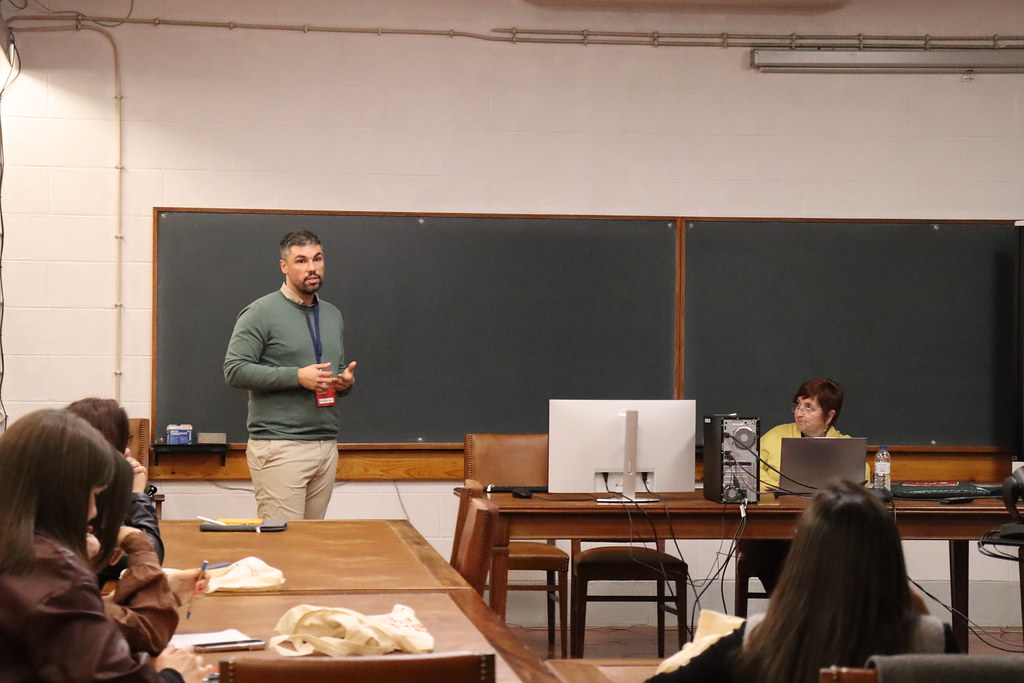
At the 14th SOPCOM Congress, held from 9 to 11 February 2026 at the Universidade da Beira Interior, several ESCS faculty members attended, all researchers at LIACOM, the research centre funded by FCT at the IPL. ESCS and LIACOM stood out for presenting 17 papers in thematic sessions, moderating five of these sessions, and participating in a plenary roundtable. In addition, three ESCS faculty members and LIACOM researchers, Ana Raposo, Pedro Marques Gomes and Tatiana Nunes, served on the congress’s scientific committee.
Over the three days of the congress, researchers and faculty from various institutions discussed key topics in contemporary communication studies, with particular focus on digitalisation, artificial intelligence, algorithmic mediation, and the ethical challenges posed to research and media practices.
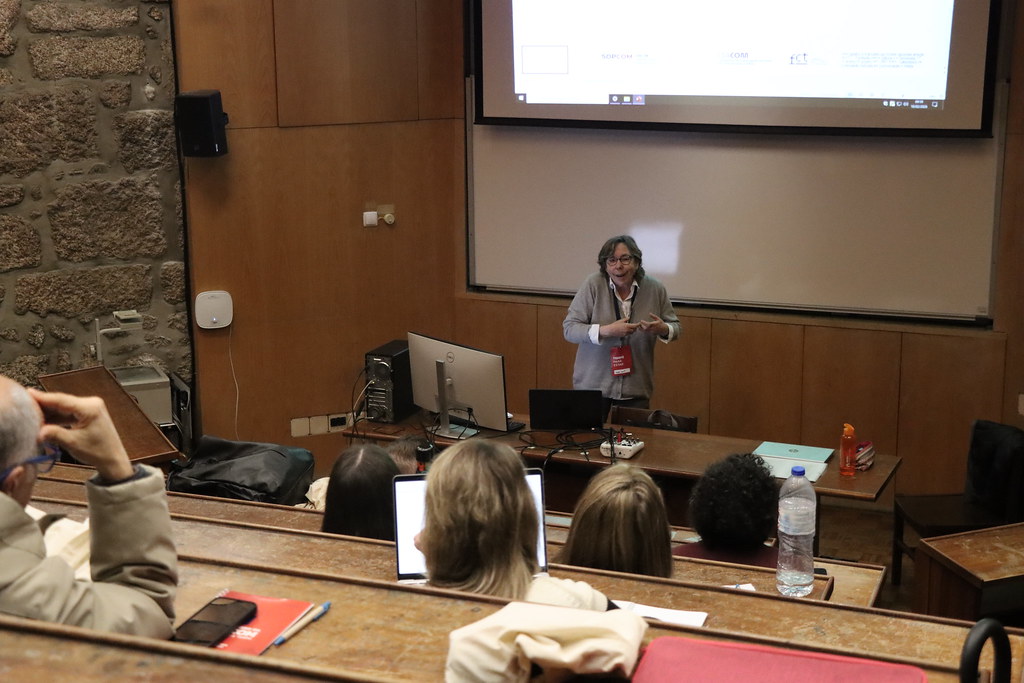
The final day of the meeting featured sessions dedicated to areas such as Organisational Communication, Journalism and Society, Media Policy and Regulation, Audiences and Publics, Advertising, Radio, History, Rhetoric, and Semiotics. A recurring concern throughout was the tension between the pace of scientific and media production and the need to ensure quality, rigor, and responsibility.
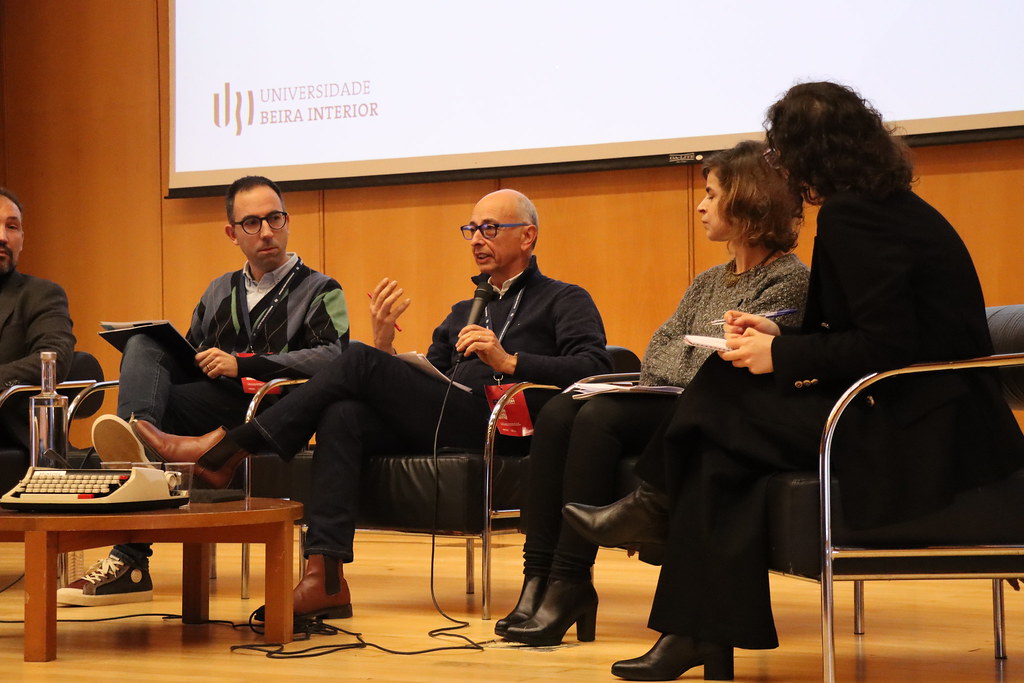
These issues were also highlighted in the plenary roundtable “Ritmos de publicação: entre a urgência produtiva e o tempo do pensamento” which brought together representatives from several scientific journals in the field of Communication. ESCS was represented by the director of the journal Comunicação Pública, Jorge Veríssimo, a faculty member of the School, who participated as a guest speaker. The debate emphasised the importance of editorial commitment and responsibility, advocating for the recognition of the time needed for the maturation of scientific work, rigorous peer review, and the sustainability of the scientific system.
The strong participation of ESCS faculty and LIACOM researchers in the 14th SOPCOM Congress reinforces the active role of the School and LIACOM in the production and dissemination of scientific knowledge in the field of Communication Sciences, as well as their contribution to contemporary debates on ethics, quality, and digital transformation.
Text authored by the ESCS Communication Service
Photographs by SOPCOM