
Published: 08.07.2026
The UNESCO Chair in Communication, Media and Information Literacy and Citizenship (LIACOM/ESCS) took part in the conference "Human Rights and Disinformation – Education as a Response to Manipulation", organised by the Portuguese National Commission for UNESCO (CNU) in partnership with the Municipality of Loures.
The conference took place on 19 June and brought together researchers, experts and representatives of public institutions to discuss the role of education in addressing the challenges posed by disinformation.
ESCS was represented by Fernanda Bonacho, holder of the UNESCO Chair in Communication, Media and Information Literacy and Citizenship, researcher at LIACOM and lecturer at the School of Communication and Media Studies (ESCS), who participated in the conference's second panel, dedicated to education for informed citizenship.
The panel also featured Luís Pereira dos Santos, President of the Executive Board of EduQA, António Marcelino, Councillor for Education at the Municipality of Loures, and Alexandre Le Voci Sayad, journalist, educator and UNESCO adviser on media and information literacy, who joined the discussion via videoconference. The session was moderated by journalist Francisco Sena Santos.
During the discussion, the panellists highlighted the importance of collaboration between schools, institutions and local communities in promoting media and information literacy. Fernanda Bonacho presented examples of initiatives developed by the ESCS UNESCO Chair in Benfica, demonstrating the impact of community-based work in empowering citizens to participate in society in an informed and critical manner.
The participants also stressed the need to map and strengthen media and information literacy initiatives across cities, fostering collaborative networks that contribute to the protection of human rights and the promotion of information ethics.
The conference brought together experts in communication, education, human rights, artificial intelligence and media and information literacy to discuss the impact of disinformation and information manipulation in today's digital environments. Throughout the morning, speakers reaffirmed the importance of developing critical information literacy skills and encouraging active civic participation, helping to build more democratic, inclusive and resilient societies.
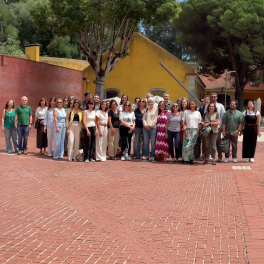
Photograph courtesy of the Portuguese National Commission for UNESCO.